
The Lullaby From Before
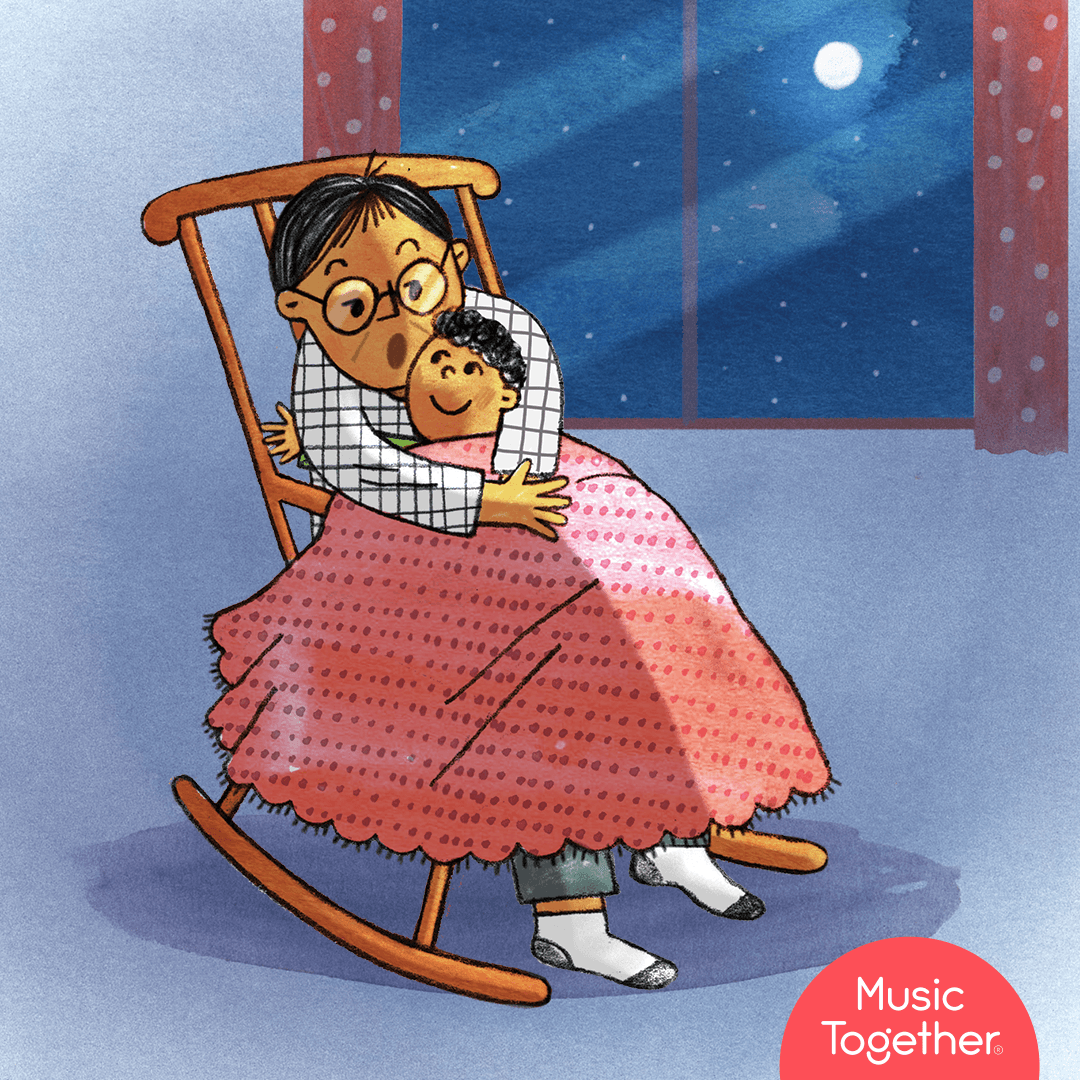
A few years ago, I asked the families in our classes a simple question. What was sung to you when you were little? If they couldn't remember, I told them to go home and ask their parents.
Some parents came back with answers right away. Some had to call home first. The answers ran the gamut from hymns to pop songs, and "You Are My Sunshine" is still a wonderful perennial favorite. A few parents told me they had never once thought about it.
Then I nudged them one step further. I asked them to go back to their parents, the grandparents of the children in our class, and find out what had been sung to them.
That second question is where things got interesting. Picture a grandparent in their sixties or seventies, reaching back to a mother or father who is probably gone now, to a voice they haven't heard in decades. Sometimes only a tune came back, or a few lines of lyrics. Even that little bit connected a family to someone their children will never meet.
Some of those songs went back nearly a hundred years. A great-grandparent learned a song as a child before World War II and sang it to their own baby. That baby grew up and sang it to the next one, and now here it was in our class with a fourth generation. Nobody ever wrote it down. Nobody recorded it. Nobody performed it. People just sang it, and for all we know it came from someone even earlier.
That is what a lullaby can hold. It holds a melody, of course, but it also holds clues about where a family came from. It tells you what language was spoken in the kitchen. It tells you what someone cared about enough to sing in the dark to a child who wouldn't remember the words for years but would never forget the sound.
Some of the families in our classes carry songs from countries they have never visited, in languages they don't fully speak. The song is what survived. The song is what made the trip.
I saw this again last week when I wrote about the Zember family. Dena's mom still sings a Farsi lullaby to her grandsons at naptime. Dena knows the melody by heart, but she is one generation removed from the language, and she told me it never quite felt like the song was hers. Then one day the class sang "Raisins and Almonds," and Dena's mom called her husband right after class to play it for him, because his own parent had spoken Yiddish. That is what these songs do. They keep looking for the next person to carry them. You can read the Zembers' story here.
At the end of this little informal project, I encouraged the parents who still had parents living to ask for one more thing. I asked them to have Grandma or Grandpa record that old lullaby for the new baby. What a gift that is.
If your parents are still around, this might be a good week to call them.
I think about this whenever someone asks me what we do. We teach music classes, sure. What we're really doing is helping families build something that outlasts all of us. The songs your child learns now, the ones you sing together at bedtime and in the car, don't expire. They get carried. They get passed along. Fifty years from now, your child might close their eyes and hear your voice singing something from a Tuesday morning class they barely remember.
That is how a tradition starts. And if your family doesn't have a song like that yet, you are not behind. Every one of these lullabies started with somebody who simply decided to sing.
That's what families do.
There's a spot for your family. Come see what a class sounds like at mistermikesmusic.com.
