
As Many Songs as Stories
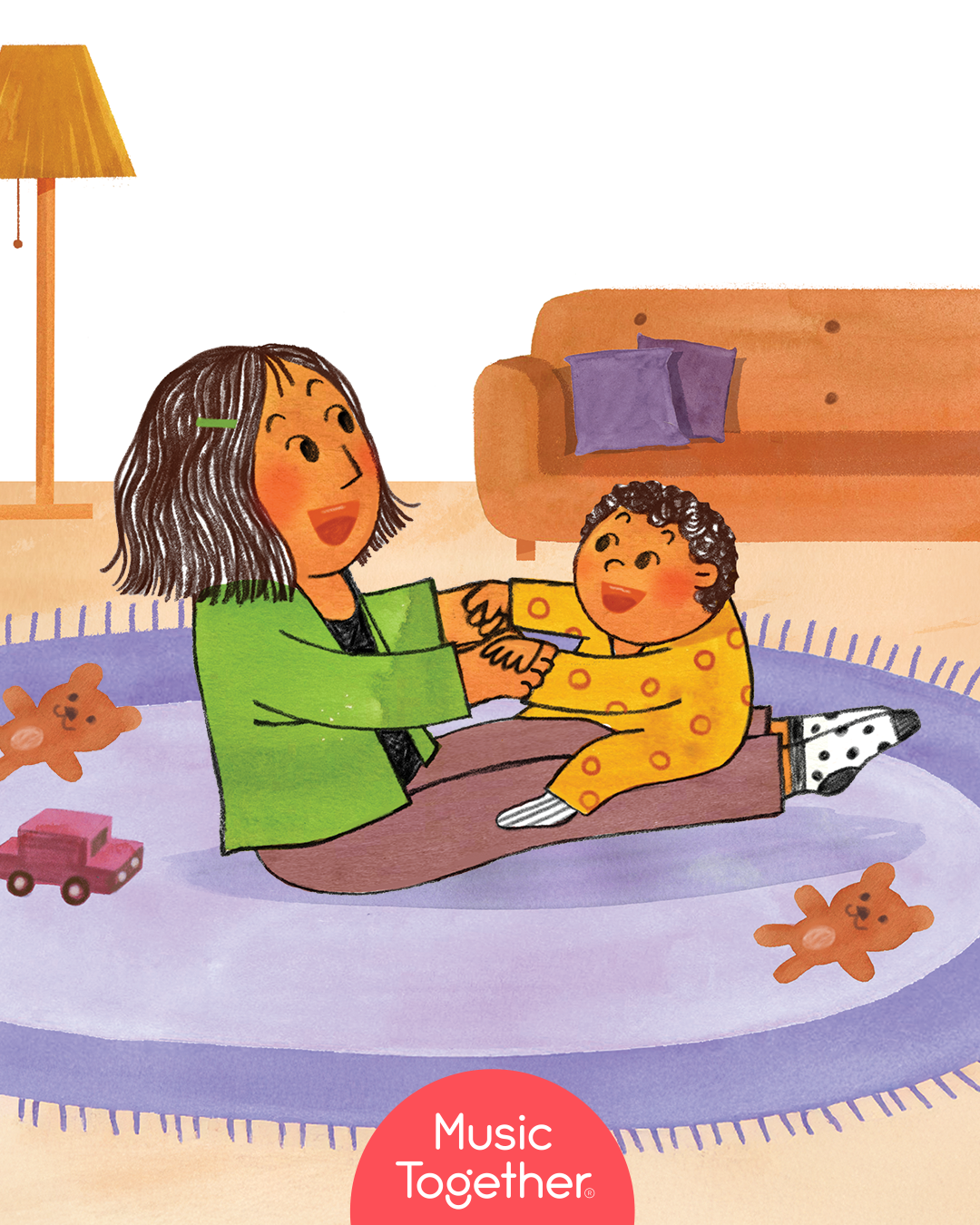
Every new parent hears the same advice: read to your child. Read from birth. Read every day.
It's good advice. Pediatricians give it at regular check-ups. By the time most babies are a few months old, there's a stack of board books on the shelf and a bedtime reading routine taking shape.
But how many songs could you sing to your child right now, from memory?
Not play. Sing. With your voice. In the car, at bedtime, during a diaper change.
Singing is like adding a new dimension to communication. Yet, many parents might struggle with this question. "Twinkle Twinkle," “Baa Baa Black Sheep”, maybe "You Are My Sunshine." After that, it gets more challenging. Not because they don't care about music. A national survey found that 98 percent of parents believe their children need music education. But only 17 percent sing to their children every day. And nearly three out of four believe that the ability to carry a tune is something you're born with or you're not.
That last number is the kicker. Imagine if 72 percent of parents believed you were either born knowing how to read or you weren't. We'd call it a crisis and reconstruct public education around it.
With reading, we do exactly that. With singing, we let it go. We let families believe the myth that music belongs to people with talent. And when parents believe that, they stop singing. The family's own voices disappear.
That's the gap our teachers think about. Our society tests and surveys regarding literacy. We’re constantly working to put books in families' hands. Nothing equivalent exists for songs.
But it could. That's part of what our classes are about. Each semester, a new set of songs. Building a library of songs that your family knows through and through with ideas to implement them in ways you never imagined. Ways to be silly with them and ways to sing in parts. Ways to wiggle and ways to dance.
This is what musical families do.
There's a spot for your family. Come see what a class sounds like.
Sources
2014 Harris Poll commissioned by Music Together LLC (conducted July 29–31, 2014, among 2,065 U.S. adults, 483 parents with children under 18): https://www.musictogether.com/mtsurvey2014
AAP policy statement on literacy promotion from birth (updated 2024): https://publications.aap.org/pediatrics/article/154/6/e2024069090/199467/
Reach Out and Read: https://reachoutandread.org
Levinowitz, L.M. (1993) — finding that parents who felt musically inadequate avoided making music at home (referenced in Rutgers dissertation, rucore.libraries.rutgers.edu)
